
When you think of a martini, the most famous cocktail order in pop culture probably comes to mind. However, that martini is not the traditional recipe, and some would go so far as to say that it’s the wrong way to make a martini. Restaurants and bars that serve martinis and other classic cocktails pride themselves on doing things the right way. We certainly feel that way at Mario’s Ristorante. To that end, we’re going to take a closer look at the ingredients and steps that go into making a traditional martini, and why each item makes a difference.
Dry Gin
The base of a classic martini is gin, usually London dry gin. This is partially due to tradition, but the flavor profile of dry gin contributes significantly. Dry gin has a complex flavor that includes piney juniper, bright citrus, and early herbal notes. These flavors come through even when the gin is ice-cold, offering a complex and refreshing taste. In cocktail terms, “dry” means not (or significantly less) sweet. Sweetness tends to overpower, so dry spirits and mixers put the flavors front and center.
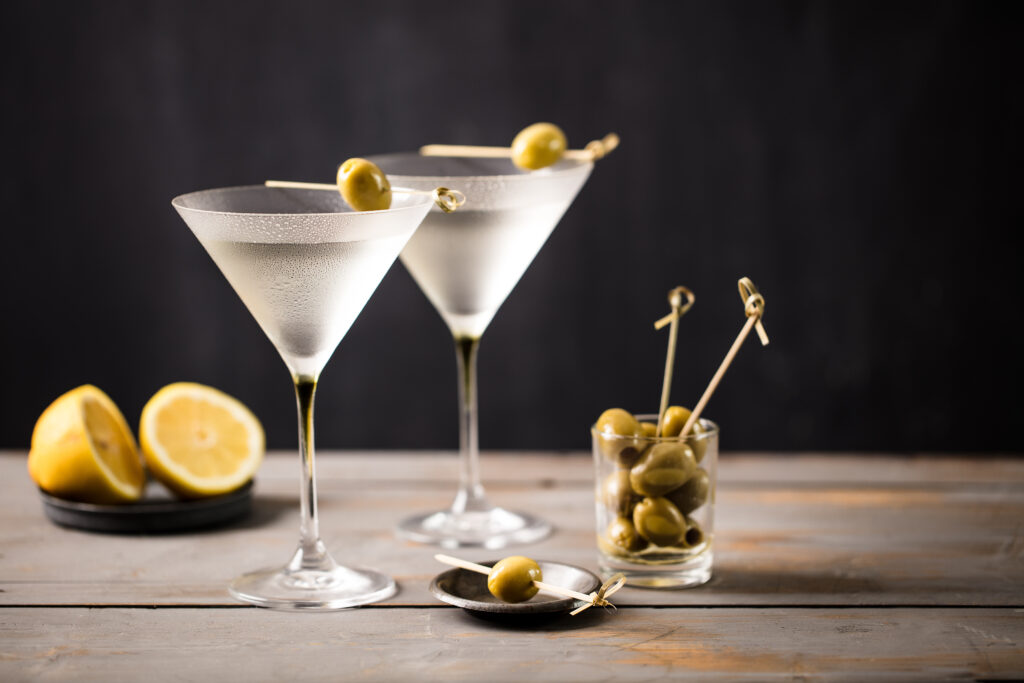
Another reason to choose dry gin is how it pairs with garnishes. The traditional martini garnishes are olives or a lemon twist. The botanical flavors of gin go equally well with the saltiness of olives or the brightness of a lemon twist.
Vermouth
The other main ingredient in a traditional martini is dry vermouth. Again, we’re going with a dry option. A martini is what’s called a “spirit-forward” cocktail, meaning that the flavor comes primarily from the base spirit rather than the mixers. When making a spirit-forward cocktail, you want to avoid anything that will mask the flavor of the base spirit, gin in this case. Using dry vermouth enhances the gin’s flavors and adds a smooth complexity to the drink.
Stir with Ice
Here’s the thing: “shaken, not stirred” is wrong, especially when making a gin martini. Gin is a delicate spirit, and agitating it by shaking it with ice can “bruise” it, breaking down its botanical flavors and resulting in a duller taste. Shaking also aerates the drink, creating tiny ice chips and a cloudy, foamy texture. Stirring, on the other hand, maintains the crystal-clear appearance and offers gradual dilution. This method preserves the flavors and ensures a beautiful presentation.